
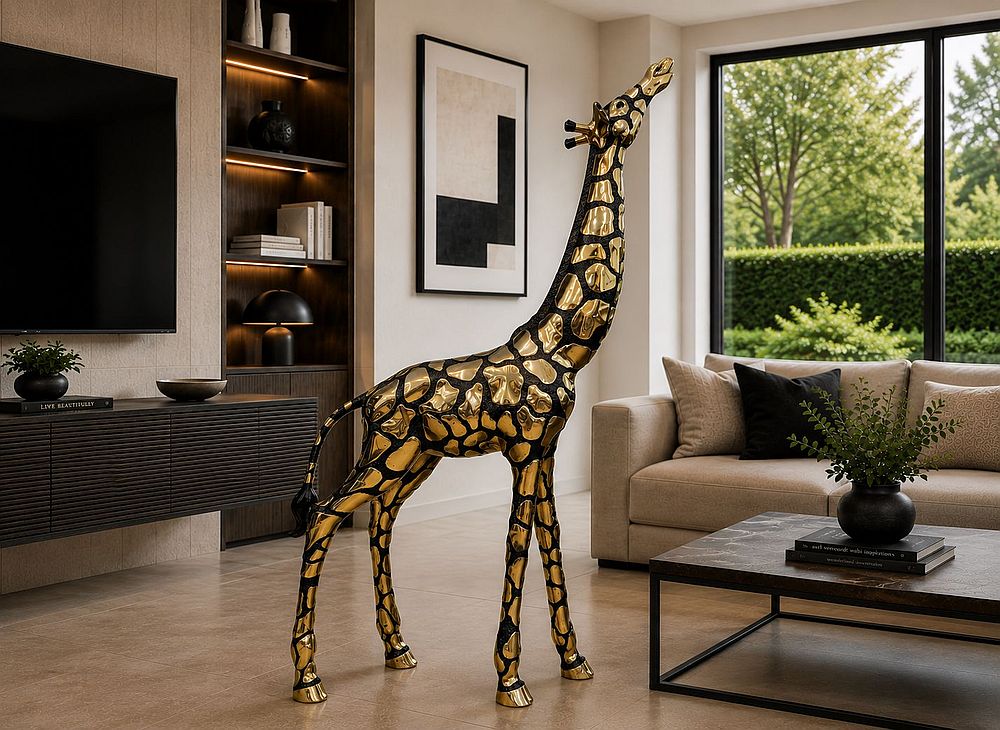
Animal statues can add character without making a room feel themed. The key is to treat the piece as sculpture first and ornament second. A well-chosen animal form brings line, texture and a point of focus to a space; it can also connect a home to wildlife, travel memories or an appreciation of African-inspired design. For anyone searching for animal statue home ideas, the most useful starting point is not a long list of objects. It is a clear decision about scale, material and placement.
Zawadi Decor’s collections include wildlife sculptures, décor and objet d’art designed for private homes as well as hospitality and corporate spaces. That range makes it possible to work with a small, refined figurine on a bookcase or a more substantial bronze statement piece in an entrance hall. This guide explains how to make either approach feel intentional.
Why Animal Statues Work in a Considered Interior
Furniture provides the practical framework, while sculpture gives the eye a place to pause. An animal statue is effective because its silhouette can create visual direction without relying on a bright colour or oversized pattern.
The best animal statue home scheme uses one or two pieces to contrast with straight furniture lines, soft upholstery or broad stone surfaces. In a neutral room, bronze brings warmth; in a layered African-inspired interior, sculpture can counterpoint baskets, textiles and art.
A piece with a strong outline can finish an awkward surface, give a large room a centre of gravity or make an entry feel more deliberate. Zawadi’s guide to African sculpture is a useful companion for selecting art that suits the room and the buyer’s taste.
Choose the Right Animal and Scale
Decide what the room needs visually. A compact form can soften a shelf; a long, low sculpture can complement a sideboard; and a taller piece may suit a plinth or wide console. The animal and its posture should both be personal choices.
| Room requirement | Useful animal-statue approach | Placement check |
|---|---|---|
| A strong arrival point | One substantial, stable sculpture with a clean outline | Leave clear space around it so it reads on arrival. |
| Movement along a long surface | A horizontal or forward-moving form | Keep the object below eye level and away from the edge. |
| Detail on a bookcase or desk | One compact piece with a tactile finish | Group it with fewer, larger objects rather than many small items. |
| A calmer room | A seated or resting form in a restrained finish | Use a simple background and a focused pool of light. |
Let the Form Set the Mood
Rather than relying on fixed symbolism, use the form to guide the feeling of the display. A sleek, moving figure can bring energy to a long console. A grounded, weighty animal can add stability to a study or entrance. A parent-and-young composition can feel appropriate in a family home. The point is not to prescribe meaning; it is to choose a form that supports the atmosphere you want in the room.
For African wildlife, build context through timber, linen, woven fibre or stone rather than clichés. Zawadi’s wildlife sculpture in bronze guide shows how wildlife forms suit contemporary, lodge-inspired and transitional interiors.
Match the Sculpture to Its Surface
Scale errors are more noticeable than style errors. A tiny ornament on a large dining sideboard can look accidental. Conversely, a heavy statement piece on a narrow occasional table can make the whole arrangement feel unsafe. Before buying, measure the surface width and depth, then decide how much empty space should remain around the sculpture.
Keep roughly one-third of a console or shelf visually open so the piece reads as sculpture rather than merchandise. On a coffee table, a lower form protects sightlines; on a mantel or cabinet, additional height can be effective.
Select Materials That Suit the Room
Material determines how an animal statue holds light and its visual weight. Bronze adds depth and patina; a silver-toned surface appears sharper, while lighter materials can suit a smaller shelf accent.
Zawadi states that its bronze, silver and gold collection is hand-finished, with bronze patina pieces suitable for indoor and outdoor use; silver-plated and gold pieces are better kept indoors.4 This is not a minor detail. The right finish should suit the intended setting before it is chosen for colour alone.
| Material direction | Best use | Consider alongside |
|---|---|---|
| Bronze or bronze patina | Entryways, living areas, studies and covered outdoor spaces | Dark timber, stone, leather, natural linen and warm lighting |
| Silver-toned finish | Modern interiors, glass-topped consoles and crisp neutral schemes | Black, charcoal, white, mirrored or pale timber accents |
| Cold-cast bronze | Detailed shelf pieces and objects that need the look of bronze at a smaller scale | Books, ceramics and framed art with restrained colours |
| Mixed decorative materials | Informal rooms or a varied collection of smaller objects | A tight palette so the display remains coherent |
For a more direct starting point, browse Zawadi’s Bronze, Silver & Aluminium Collection before selecting a finish. Link the material to the room’s existing metalwork: antique brass lighting, black-framed art, stainless fittings or brushed nickel. When the finishes speak to one another, the sculpture looks integrated rather than added at the end.
Give One Piece a Clear Focal Position
The strongest animal statues have space around them. An entrance console is a good location because the sculpture can establish the tone of the home before the room becomes visually complex. A central coffee table, a low credenza or a sideboard opposite a seating area can work equally well.
Think about lighting before finalising the position. A side light or directional lamp will reveal relief, edges and cast shadows more effectively than flat overhead lighting. Avoid placing a detailed piece in front of a busy patterned wall, where its silhouette may disappear. If the background is plain, the sculpture can do more of the visual work.
For more large-scale styling context, readers can explore Zawadi’s African-inspired home décor ideas. The aim is not to recreate every feature in a single room. It is to borrow a coherent approach to texture, contrast and focal points.
Style Smaller Animal Statues with Restraint
Small animal statues are useful, but they need editing. On a shelf, combine one figurine with a stack of books and one object of a different texture, such as a ceramic vessel. Keep the group to two or three elements. The books give the sculpture a visual base, and the contrasting material stops the arrangement from feeling like a souvenir display.
A desk is another good setting. Keep the piece away from the primary work zone and choose a clean profile that does not compete with screens, files or task lighting.
Avoid repeating the same animal in every room. Variation makes a collection feel considered. It is better to use one strong animal statue in the living room, one small detail in a study and perhaps no wildlife object at all in the kitchen than to scatter similar pieces throughout the home.
Avoid the Common Mistakes That Make a Display Feel Busy
The most common mistake is buying several small items before deciding what the room needs. That approach can create clutter rather than personality. Begin with one meaningful sculpture and build around it only if the surface still needs something else.
The second mistake is mixing too many finishes. Bronze, silver, glossy ceramic and bright painted décor can work together, but they need a connecting element such as a repeated colour or a consistent material palette. If the room already has several metal finishes, choose an animal statue that reinforces the dominant one.
Finally, respect everyday movement through the home. A sculpture hidden behind a lamp, crowded by remote controls or likely to be knocked will not have its intended impact.
Protect the Finish and Choose with Confidence
Care starts with appropriate placement. Keep an indoor sculpture clear of abrasive cleaners, and dust it with a soft, dry cloth unless the product guidance states otherwise. For outdoor bronze patina pieces, natural oxidation can develop over time; Zawadi notes that this is a characteristic feature of bronze used outside. If you choose a silver-plated or gold-finished work, treat it as an indoor decorative object and protect it from unnecessary moisture.
Before committing, check the product dimensions, finish, recommended setting and delivery details. A Rhino and baby bronze sculpture or Cheetah Hunting bronze sculpture may be right for a major focal point, while the wider collection provides options for smaller accents. The best choice is the one that fits the architecture, the surface and the story you want the room to tell.
Used carefully, animal statues turn an empty surface into a composed moment. They bring shape, texture and a connection to the natural world without demanding a themed interior. Choose one that has a clear purpose, give it enough visual space and let craftsmanship, not clutter, carry the room.